
Readiness Monitors Not Ready
Enter the car's model year and how many monitors read not ready to see whether it can be tested today.
If your readiness monitors show not ready, the car's self-checks on its emissions systems haven't finished yet, so the inspection station can't get a full result. This often follows a recent repair, a new battery, or trouble codes that were just cleared. Often the fix is simply more time behind the wheel.
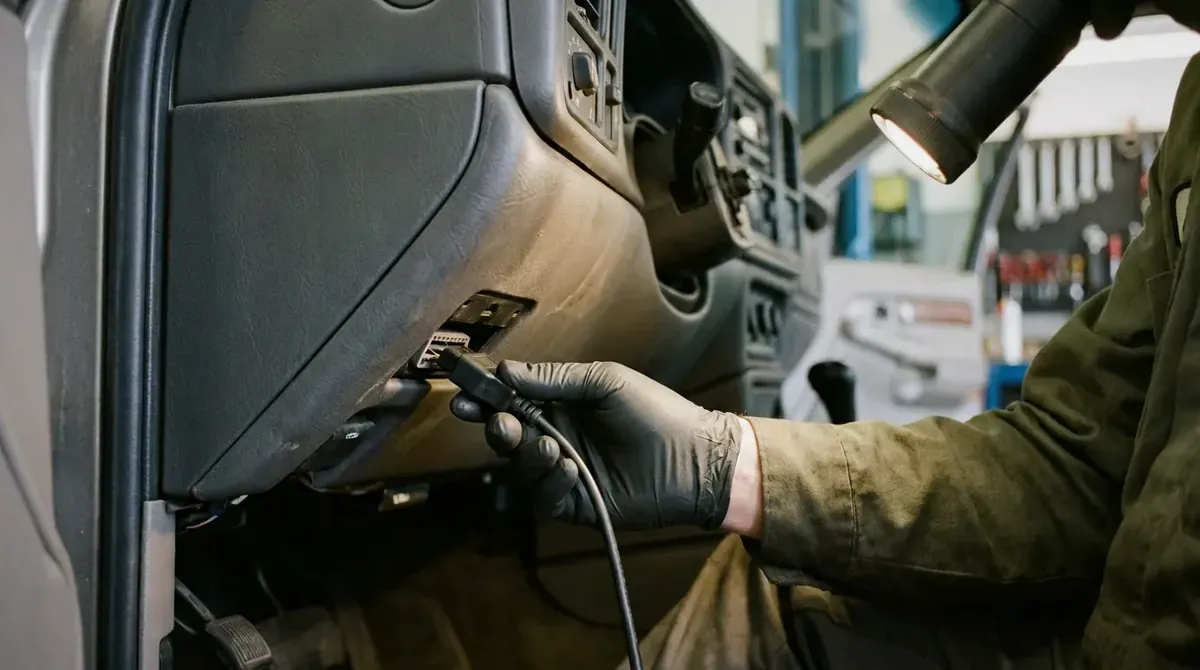
Common reasons a car reads not ready
Each readiness monitor is a built-in check the car's computer runs on one emissions system, and it's named after the part it watches, like the catalytic converter or oxygen sensor. Depending on the year, make, and model, most vehicles run about 10 of these tests. Here's what typically leaves them reading not ready:
- A scan tool cleared trouble codes during recent work.
- The battery was just disconnected or swapped out.
- The car is due for a software update.
- A fault is developing but hasn't set off the check engine light.
How many monitors can be not ready?
It depends on your car's model year and your state's rules. Most states follow EPA guidance on how many unfinished monitors a car can have and still be tested. New York, for example, fails a 2001 or newer car with more than one not ready.
| Model year | Not ready monitors allowed |
|---|---|
| 1996 to 2000 | 2 |
| 2001 and newer | 1 |
So a 2012 car showing 2 monitors not ready still needs more driving, since only 1 is permitted. A 1999 model with 2 incomplete monitors can go ahead with testing.
California is stricter. New rules dated October 1, 2025 call for every monitor to be set, but the state is still using its older pass/fail limits for now: a gas car from 2000 or newer can pass with only the EVAP (fuel vapor) monitor unset, and a 1996 to 1999 gas car with any one monitor unset.
A drive cycle to set the monitors
A drive cycle is a set pattern of driving that creates the conditions the car needs to complete its self-tests. Your manufacturer may publish its own routine. These steps come from the New York DMV's general guidance and aren't the whole routine, so check your manufacturer's own drive cycle first.
- Make sure the tank is between half and three-quarters full before you start.
- Start the engine once it's fully cold, best after an overnight sit.
- Shift into drive and let it idle 2.5 minutes with the A/C and rear defroster switched on.
- Wrap up by holding a constant 55 to 60 mph for 5 minutes.
New York DMV says most cars need two complete drive cycles with a cool-down between them.
How much driving is needed after clearing codes?
Give it roughly a week of mixed city and highway miles, which OBD Auto Doctor notes is typically sufficient. After the battery has been disconnected, the full set of monitors may need several days or even a few weeks to complete. If you've driven fewer than roughly 200 miles since the battery swap or code clearing, the monitors are probably still not ready.
Frequently asked questions
Which monitors does my car have?
Gasoline cars usually support 6 to 8 monitors. Three of these run continuously and always report ready. The rest only run under the right driving conditions. For a gasoline car, those include the catalyst, oxygen sensor, oxygen sensor heater, EVAP, and EGR tests.
Which monitor is hardest to set?
According to the EPA, the EVAP monitor is the toughest to set. Under California's current pass/fail limits, gasoline cars from model year 2000 onward may pass with only the fuel vapor monitor, called EVAP, unfinished.
Could the catalyst monitor be the one showing not ready?
It can be. The EPA recommends that states always require the catalyst and oxygen sensor monitors to read ready, so if one of those is the one still running, it's worth finishing the drive cycle before you go in.
What if the monitors won't set even after plenty of driving?
A software update might be what the car needs. There could also be a problem that hasn't yet switched on the check engine light. A shop can check into either one. RepairPal puts the average cost of an emissions diagnosis at $61 to $90.