
Engine Carbon Cleaning
Engine carbon cleaning clears away the hard, black carbon that collects in an engine, especially on the intake valves in cars with direct injection. Those deposits can leave a car slow to accelerate and running roughly. What it costs, how it's done, and how well it works all come down to where the carbon has settled.
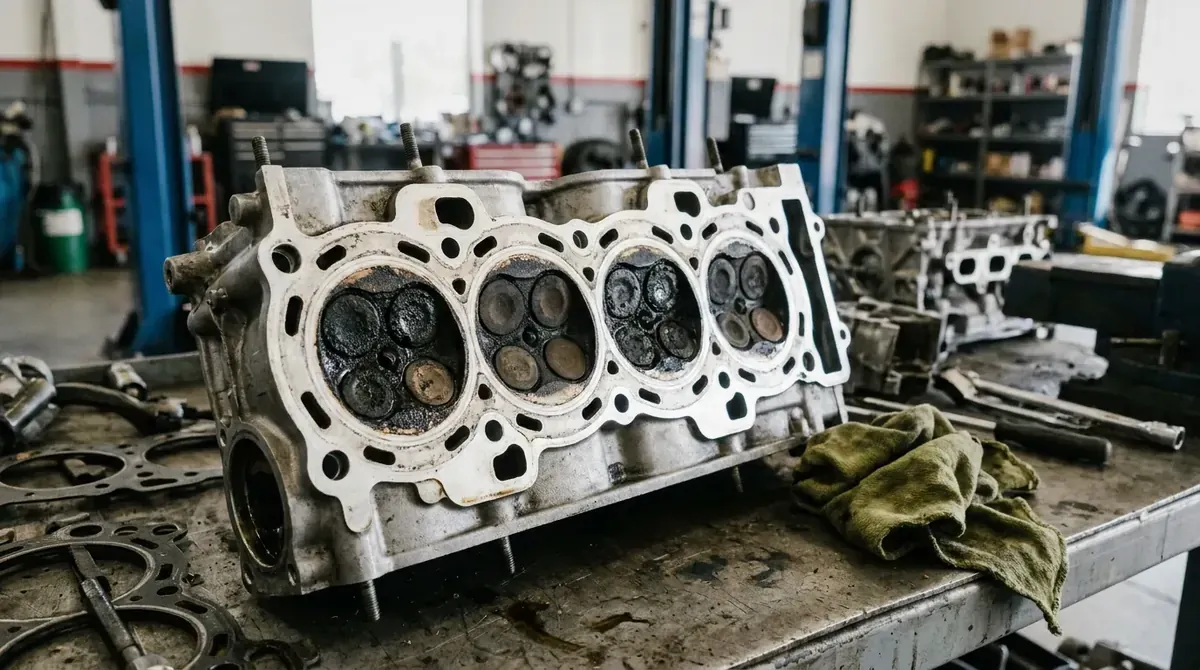
Where does carbon build up in an engine?
Hemmings points to 3 spots: the intake manifold, the valves that feed each cylinder, and the chamber where fuel burns. The intake valves sit at the top of each cylinder and work like small doors that open to let air in.
Many newer cars use direct injection engines, which spray fuel right into the cylinder rather than over the intake valves. Manufacturers switched to this design to meet strict emissions standards, and it brings better fuel economy, power, and efficiency. The downside is that fuel no longer rinses the intake valves, so carbon can gather there and choke off the air flowing into the engine.
Given the right conditions, deposits can form in under 1,000 miles. Cold starts, lots of idling, brief trips, and heavy stop-and-go traffic all speed up how fast carbon forms.
Signs of carbon buildup
Carbon sitting on the intake valves tends to cause:
- A slow response when you accelerate
- Misfires, when a cylinder fails to fire its fuel and the engine shudders or hesitates
- Rough, uneven running
Carbon inside the combustion chamber can bring on knocking, which sounds like metal pinging or rattling. It may also force the engine onto higher-grade gas to quiet that noise. Once the deposits grow very thick, the piston can hit the cylinder head, producing a sound known as carbon knock. Briggs & Stratton notes that in small engines this buildup can raise oil consumption and cause overheating.
What does carbon cleaning cost?
The only price we found comes from Autool, a company that sells walnut blasting machines. It puts a cleaning at about $50 to $150 a session, so ask a local shop for its own quote.
| Item | Seller's price |
|---|---|
| Carbon cleaning, per session | $50 to $150 |
| Walnut blasting machine rental | $50 to $150 a day |
| Walnut blasting machine purchase | About $350 |
Much of the work is getting to the valves. For direct injection engines, shops often use walnut blasting, which drives ground walnut shells into the intake ports with compressed air. Getting to those ports means the entire intake manifold must be removed. On certain vehicles, the whole engine has to be removed.
Hydrogen carbon cleaning
With hydrogen cleaning, often called HHO cleaning, a shop machine sends a hydrogen-oxygen mix into the intake stream as the engine runs. Nothing gets taken apart. Antismog says the goal is to cut harmful exhaust emissions, lower upkeep costs, and improve fuel economy.
One equipment seller notes that skipping the teardown also skips the risks that come with it. Both of these statements come from the businesses selling the equipment, so it's fair to ask which of the 3 carbon areas a treatment actually reaches.
Does carbon cleaning work?
It varies by method. Once the manifold is off, walnut blasting can clean the intake valves themselves, so it goes after the deposits that cause weak acceleration and misfiring in direct injection engines.
On an engine with heavy carbon, one chemical cleaning usually isn't enough, and Hemmings says you may need to repeat it over two or three months. The hydrogen cleaning sources we found are businesses selling the equipment, and they describe its goals but do not show how well it works.
Can carbon buildup cause a failed emissions test?
Yes. Deposits in the intake manifold can affect emissions, and misfires can push unburned fuel out through the tailpipe.
Carbon can clog the EGR valve too, a part that routes a small amount of exhaust back through the engine so it stays cooler. A blocked valve can set off code P0401, and any car showing a check engine light will not pass the plug-in emissions test. RepairPal lists an average EGR valve replacement cost of $489 to $632, and recommends clearing carbon from the valve and its passages first.
Common questions
How often does my engine need carbon cleaning?
The repair shop Fluid MotorUnion says most direct injection engines need a carbon cleaning every 60,000 miles or sooner.
How do I stop carbon from building up?
Hemmings says your best protection is gasoline with the necessary additives. Hemmings also says cheaper engine oils without the right additives can increase deposits on the intake valves. The alcohol in regular pump gas appears to make them form faster too.
What downsides does carbon cleaning have?
With walnut blasting, the big drawback is the work involved, since the intake manifold, and sometimes the engine, has to come off. The old-style job took even more effort: after pulling the cylinder heads, mechanics had to scrape the deposits away by hand.