How to Pass an Emissions Test
Give the model year, the dashboard light, any recent battery change and the gas cap, and you get a short list of what to fix before emissions testing.
To pass, your car needs the check engine light off and a warm engine. After any repair, it also needs some driving so its own self-checks can finish. Most failures come from a handful of common problems, and you can find them at home before testing.
Getting ready for the smog test
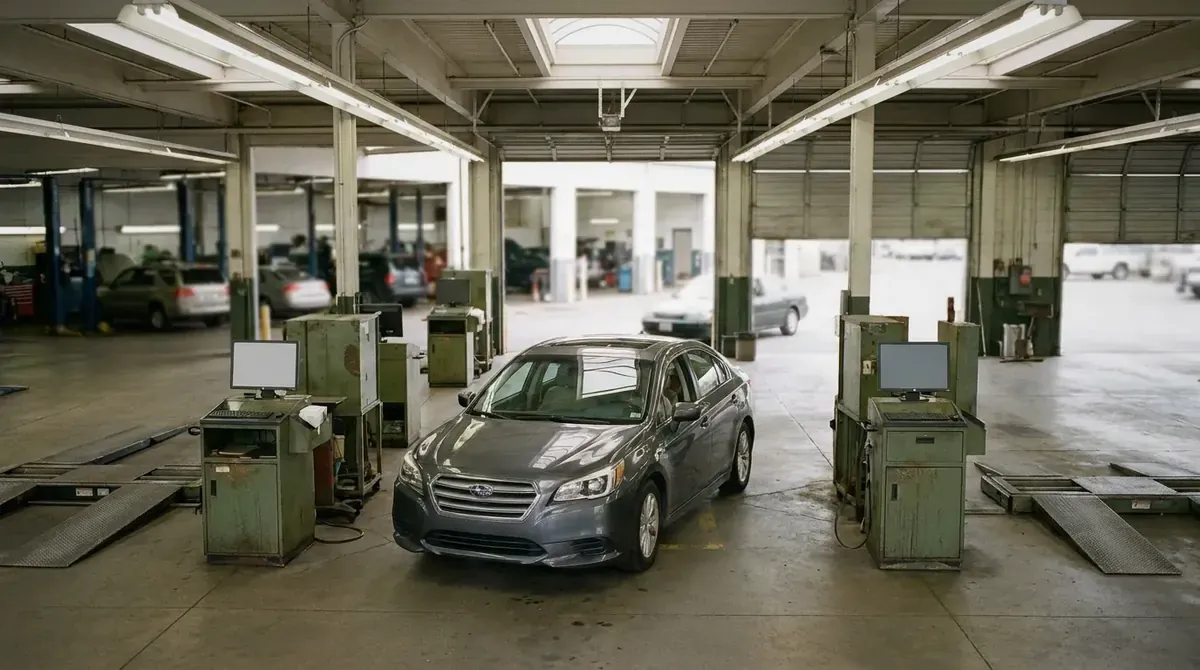
An emissions test measures the gases that come out of your car. California calls it a "smog check", and so do a few other states. If your car is a 1996 model or newer, the inspector plugs a small tool called a code reader into a socket under the dashboard. This tool reads the car's computer. With older cars, the inspector measures the exhaust by putting a thin tube in the tailpipe.
A few days before the test, go over this brief list:
- Turn the car on and look at the dashboard. A check engine light that stays on means the car won't pass, so have it looked at and repaired before anything else.
- Twist the gas cap until you hear it click. Gas fumes can escape through a loose cap, and the car's computer logs the problem.
- If the oil change is due, get it done, because dirty oil can raise emissions.
- Put in fresh gas until the tank is at least half full.
- The drive to the test should take 15 to 20 minutes. Passing is easier when the engine and the catalytic converter (the part that cleans exhaust gases) are warm.
First, try these low-cost fixes
A few repairs cost little or nothing at all. It costs nothing to tighten the gas cap. For an older car, a tune-up often helps. That means new filters and new spark plugs, the small parts that make the spark that burns the fuel. Extra air can get into the engine through a rubber hose that's cracked or loose; that's called a vacuum leak, and repairing it also helps.
Whenever the check engine light switches on, the car stores a short trouble code like P0420. Hold off on buying an expensive part until a shop reads it. The fee is usually about $61 to $90, and it often stops you buying a part the car never needed. Our tool for failed tests tells you the usual meaning of each code and the usual cost of the repair.
Can a car pass with the check engine light on?
No, not in states that plug into the car's computer to test. In Arizona and Texas, for instance, a car with that light on fails. Inspectors also test the light itself: it should come on as you turn the key and go off after the engine starts.
Erasing the code or disconnecting the battery also won't get you a pass. Either one wipes the car's self-checks, and it keeps failing until they have run again. Driving the car normally for a while is the only way to get them done.
How far do you need to drive after the codes get cleared?
Expect about 200 miles of driving, mixing city streets and highway. Mechanics use the term readiness monitors for these checks; the car's computer runs them on each part that controls pollution while you drive. Once a new battery goes in or codes are cleared, Jiffy Lube suggests 200 miles or more of driving, and about 100 miles after other repairs.
Do the repair first and the driving after it. Any driving done ahead of the fix won't count, because the fix itself restarts those checks.
On test day, a 2001 or newer car is allowed one unfinished check, and a 1996 to 2000 car is allowed two. If unfinished self-checks are the only problem, you don't need new parts: just keep driving.
Passing the test: common questions
Why would a car not pass an emissions check?
A short list of causes explains most failures: a check engine light that's on, a loose gas cap, a dirty air filter, a weak ignition coil (the part that produces the spark), or worn spark plugs. A worn-out oxygen sensor can also make the car fail. It's a small part in the exhaust pipe that measures how cleanly the engine burns fuel. Removing or changing a part that controls pollution also fails the car, and that part must go back on.
With a P0420 code, can my car still pass?
No. As long as that warning light stays lit, it fails. P0420 means the catalytic converter no longer cleans the exhaust well enough, usually because it has worn out. The same code can also come from a leaking exhaust or a failing oxygen sensor, both much cheaper to repair. Ask the shop to rule those out before you pay about $2,280 to $2,480 for a new converter.
What happens next when unfinished checks were the only failure?
Don't buy parts yet; the car just needs more time on the road. Use the car normally for a few days, mixing city and highway trips, then take it back for another test. Some states give extra time for this if your deadline has passed. For instance, New York gives you 10 days of extra time. What your state allows is spelled out on its rules page.
Where can you get tested near Dallas or Fort Worth?
Texas requires testing in 18 counties, including Tarrant County (home of Fort Worth) and Dallas County. In those counties, the test costs no more than $18.50 and happens once a year, ahead of the registration renewal (the yearly paperwork that keeps the car legal to drive). You'll find the stations listed on the state's official inspection page. Spend $600 or more on emissions repairs and still fail, and Texas may then issue a waiver, which allows registration for a limited time without passing.