
Check Engine Light and the Emissions Test
When your check engine light stays lit, the car fails an emissions test that reads its computer. Something as small as a gas cap that doesn't seal could be behind it. Once you find what triggered the light, fix it, then drive a while so the car can complete its own checks.
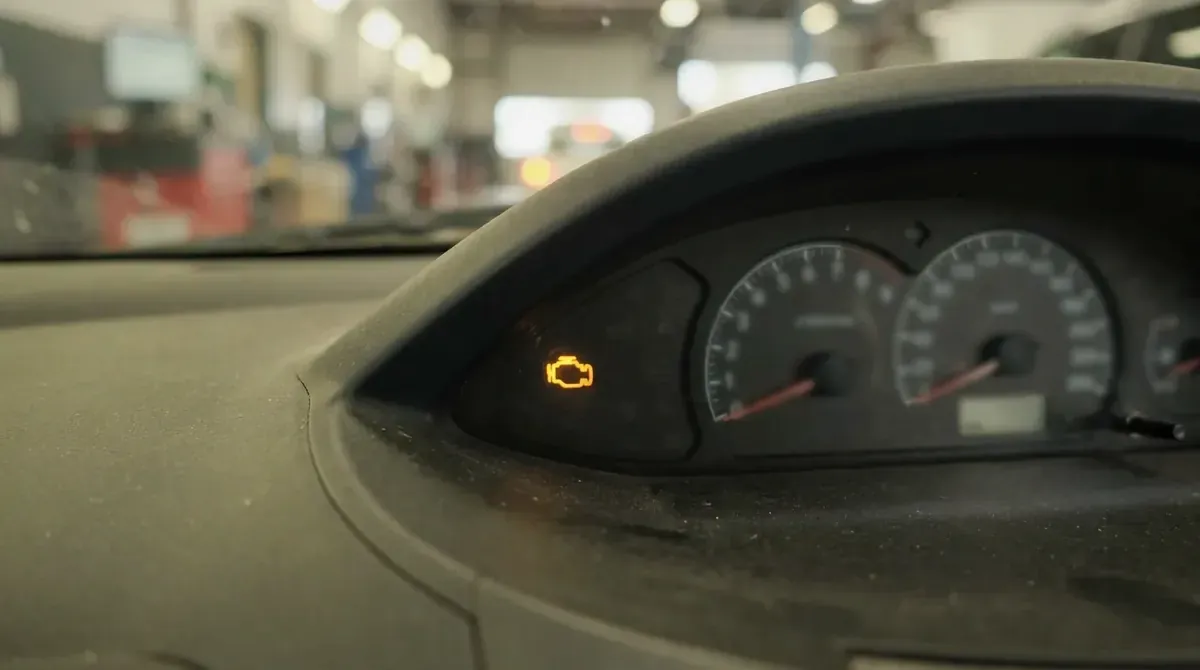
If the light is on, can the car pass?
In most cases, no. Cars made from 1996 onward carry a little computer whose job is to keep an eye on the anti-pollution parts. When a problem is spotted, the "Check Engine" light comes on and a trouble code is stored, a short code like P0301 that points at the fault. At the test, the station connects to this computer and reads what it has stored.
Arizona and Texas, for instance, each fail any car whose light is on. The station also checks that the light works. It should come on when you turn the key and go off once the engine runs.
What to do when the light is on and your test is near
Switching the light off without fixing anything won't help, since the fault remains. Follow these steps in the order given:
- Start with the gas cap. One that is loose or missing is among the most common causes, and the simplest to fix. After tightening it until it clicks, drive a few days to see whether the light goes out.
- When the light won't go out, ask a shop to read the trouble code. The cost is usually about $61 to $90, and it shows you what needs fixing so you avoid paying for the wrong part.
- In the days before the test, leave the code and the battery alone. Erasing the code or unplugging the battery resets the car's own checks, so it shows as not ready.
- Once the repair is done, drive as usual for at least 100 miles (about 200 miles if the battery was replaced).
Self-checks the car has to complete before the test
Out on the road, the car runs a test on each of its pollution parts in turn. These checks are called readiness monitors by mechanics, and the station checks whether each one shows "Ready". Most of them go back to "Not Ready" if you erase the code or unplug the battery, and only driving in town and on the highway together finishes them again.
Most cars can still pass with one check not finished. Cars built from 1996 to 2000 can pass with two. Rules in California and Illinois are a bit tighter, so use the readiness monitors tool if any on your car show as not ready.
Common faults and their repair costs
Here are the usual causes, from the cheapest fix to the most expensive:
- the gas cap not sealing
- an air filter clogged with dirt
- a split vacuum hose (a rubber line that can let extra air reach the engine)
- tired spark plugs or ignition coil, which together light the fuel
- an aging oxygen sensor, the small part that samples the exhaust
- an aging catalytic converter, which scrubs the exhaust clean
Expect to pay about $10 to $60 for a new gas cap, compared with about $2,280 to $2,480 for a new converter.
Enter your trouble code in the emissions test failed checker to see the likely cause and what the repair usually costs.
Questions drivers often ask
If my test is coming up, what does P0420 mean?
Put simply, the catalytic converter should be cleaning the exhaust better than it is. The usual reason is a worn converter, though the same code can also come from an exhaust leak or a bad oxygen sensor. Get those looked at first, because they cost much less than replacing the converter.
What happens when I can't afford the repair?
In many states there is a way out called a waiver: spend the state's set amount on emissions repairs, and if the car is still failing, you are allowed to register it for a time. For example, Texas sets that amount at $600. Your state's amount appears in the fix, waiver or sell tool.
Is a small EVAP leak code a problem?
Yes. P0442 means a small leak in the EVAP system, the parts that keep the gas fumes from the tank sealed in, and the car still won't pass. The gas cap comes first; next, the shop should check the EVAP purge valve. It's a small valve that sends fumes from the tank to the engine.